
Table of Contents
ToggleTable of Contents
What is African Black Soap?
Origins & Traditional Craftsmanship
African black soap, known as “ose dudu” in Yoruba or “alata samina” in Ghana, represents centuries of West African skincare wisdom. Authentic versions originate primarily from Nigeria and Ghana, crafted through traditional methods that combine:
-
Plant ash from banana peels, cocoa pods, palm leaves, or shea bark
-
Natural oils and butters including shea butter, palm kernel oil, coconut oil, and palm oil
-
Traditional saponification process using potash derived from plant ash
Key Differences from “Activated Charcoal Black Soap”
Traditional African Black Soap
-
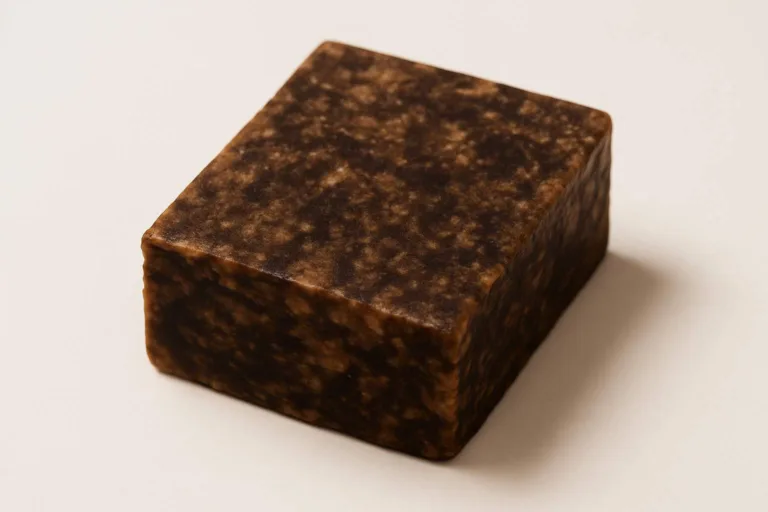
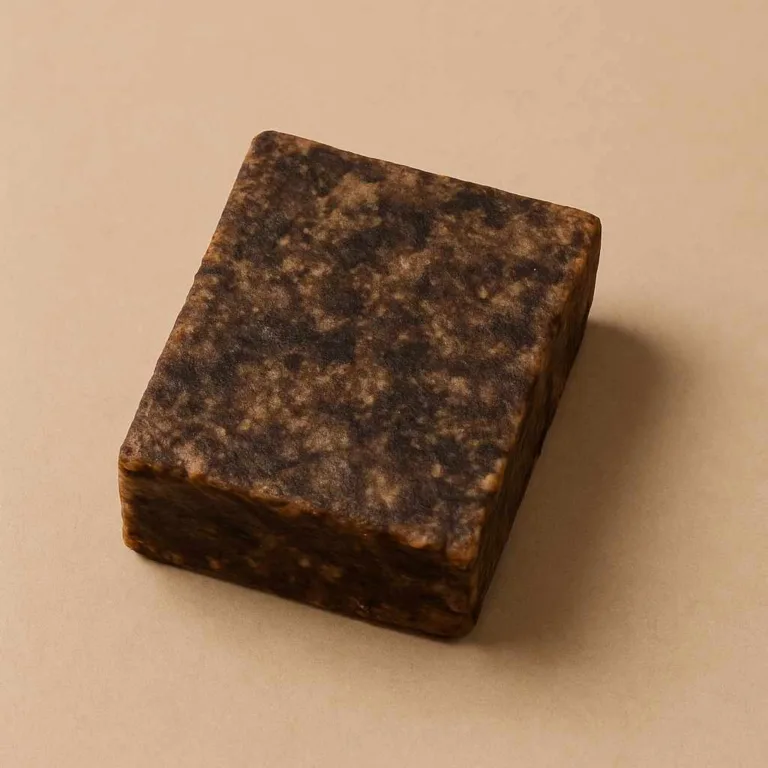
Color: Brown to dark brown with irregular texture
-
Made with: Plant ash (potash)
-
Properties: Naturally antibacterial from traditional ingredients
-
Crafting: Handcrafted, often with visible texture variations
Activated Charcoal Soap
-
Color: Pure black, uniform appearance
-
Made with: Activated charcoal powder
-
Mechanism: Adsorption-based cleansing
-
Production: Machine-manufactured, smooth texture
Antibacterial & Cleansing Mechanisms
Research indicates that traditional African black soap’s cleansing properties stem from its alkaline nature and natural antimicrobial compounds found in plant ash and oils. The soap’s effectiveness against bacteria and fungi makes it particularly suitable for acne-prone and oily skin types.
Identifying Authentic vs. Fake African Black Soap
Visual & Texture Clues
Authentic indicators:
-
Brown to dark brown (not pure black)
-
Irregular, sometimes crumbly or soft texture
-
Visible specks, uneven coloring, rough patches
-
Often softer, may feel slightly sticky
Red flags for fakes:
-
Pure black with uniform appearance
-
Perfectly smooth, hard texture
-
Artificial fragrance (authentic has earthy, nutty scent)
-
Extremely low prices for bulk
Ingredient Lists & Sourcing
Look for these authentic ingredients:
-
Plant ash or potash
-
Shea butter (Butyrospermum parkii)
-
Palm kernel oil
-
Coconut oil
-
No artificial dyes or synthetic fragrances
Fair Trade & Cooperative Certifications
Authentic African black soap often comes with:
-
Fair trade certification
-
Women’s cooperative backing
-
Traceability to Ghana or Nigeria
-
Sustainability certifications
Benefits & Suitable Skin Types
Oily & Acne-Prone Skin
-
Effective for body acne, especially back and chest
-
Removes excess oil and buildup
-
Natural antimicrobial properties reduce acne-causing bacteria
-
Recommendation: Start 2–3 times per week
Scalp Care & Dandruff
-
Treats dandruff and seborrheic dermatitis
-
Manages oily scalp and product buildup
-
Hair note: Use as clarifying treatment 1–2 times weekly, follow with conditioner
General Skin Maintenance
-
Gentle exfoliation
-
Deep pore cleansing without over-stripping
-
Moisturizing from shea butter
Limitations & Precautions
Not Ideal For:
-
Very dry or sensitive skin
-
Damaged skin barrier conditions
-
Daily facial cleansing
The pH Controversy: Understanding Skin Barrier Impact
Why pH Matters
Healthy skin has an acid mantle with pH 4.5–5.5, which:
-
Protects against bacteria
-
Maintains barrier function
-
Prevents water loss (TEWL)
-
Supports skin microbiome
Traditional African Black Soap pH Levels
-
pH: 8–10 (alkaline)
-
Effects: temporarily raises skin pH, increases TEWL, may irritate sensitive skin
Safe Usage Strategies
-
Short contact (under 60 sec)
-
Immediate moisturizing afterward
-
Start with 2–3 times weekly
-
Optional: use pH-balancing toner
pH-Balanced Alternatives
Formulations adjusted to pH 5.5–7, combining tradition with sensitivity-friendly use.
2025 Trend: African Net Sponge Pairing
Why It Became Popular
-
Superior lathering
-
Long design for back and shoulders
-
Quick-drying, hygienic
-
Gentle exfoliation
Optimal Pairing
-
Use 1–3 times weekly
-
Lather with small soap amount
-
Gentle motions, avoid pressure
-
Avoid pairing with acids or using on irritated skin
Sourcing Quality Sponges
-
Authentic African sourcing
-
Durable nylon or woven material
-
Length 24–36 inches
-
Fair trade preferred
Shopping & Storage Guidelines
Purchasing Checklist
✅ Brown/dark brown color
✅ Plant ash and oils in ingredients
✅ Irregular texture
✅ Ghana or Nigeria origin
✅ Fair trade/cooperative certification
✅ Reasonable pricing
Product Format Comparison
-
Raw blocks: Most authentic, economical, longest shelf life
-
Pressed bars: Convenient, may contain binders
-
Liquid versions: Easy for pumps, may need shaking, check preservatives
Storage Best Practices
Solid soap:
-
Keep dry and ventilated
-
Use draining soap dish
-
Avoid humid bathrooms
Liquid soap:
-
Store cool and dry
-
Check expiration
-
Shake before use
-
Watch for separation or odor
Usage Protocols by Skin Type
Oily & Acne-Prone Skin
-
Week 1–2: Every other day
-
Week 3–4: Daily if tolerated
-
Follow with lightweight moisturizer
Dry & Sensitive Skin
-
1–2 times weekly max
-
Quick lather and rinse
-
Follow with rich moisturizer
-
Warning: stop if tightness or redness occurs
Scalp & Hair Care
-
1–2 times weekly clarifying
-
Massage scalp only, rinse well
-
Conditioner for mid-lengths and ends
Men’s Body Care & Back Acne
-
Post-workout ideal
-
Use with sponge or brush
-
Focus on back, chest, shoulders
-
Daily or 3–4 times weekly
Sustainability & Social Impact
Women’s Empowerment & Fair Trade
Supports:
-
Women’s cooperatives in Ghana/Nigeria
-
Fair wages
-
Community programs
-
Education for girls and women
Environmental Considerations
-
Biodegradable ingredients
-
Minimal packaging
-
Shea tree reforestation projects
-
Low-carbon traditional production
Supply Chain Challenges (2024–2025)
-
Climate impacts on shea harvests
-
Political instability
-
Rising global demand
-
Currency fluctuations
Frequently Asked Questions
Is African black soap actually black?
No, it’s brown to dark brown. Pure black often means dyes or charcoal.
Can I use it every day?
Depends on skin type. Start 2–3 times weekly for face. Body can handle more frequent use.
Does it lighten dark spots?
It may improve skin texture and blemishes through exfoliation and cleansing, but not a strong lightening agent.
Is it safe for hair and scalp?
Yes, as a clarifying treatment 1–2 times weekly. Use conditioner afterward.
Can I combine it with acids or retinoids?
Avoid same-day use with strong acids or retinoids. Space out by 24 hours.
How long does it last?
-
Solid: 6–12 months if stored dry
-
Liquid: 1–2 years (check expiration)