Table of Contents
ToggleTable of Contents
What Is African Black Soap?
African black soap is a traditional West African cleansing bar that’s been crafted for centuries using time-honored methods. Made primarily from plantain skins, cocoa pod ash, shea butter, and various plant oils, this soap represents generations of skincare wisdom passed down through West African communities.
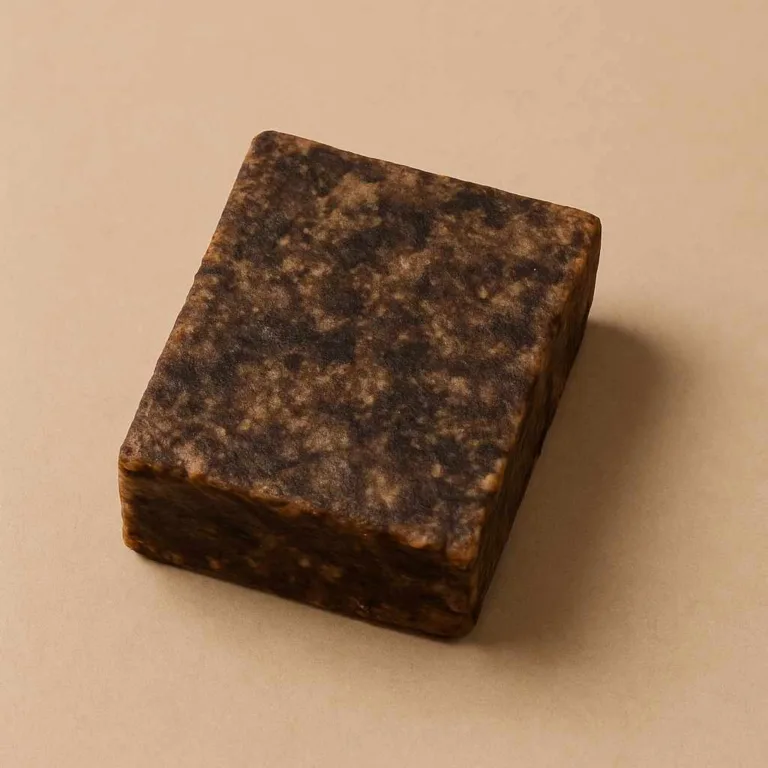
The natural color ranges from light brown to deep black, depending on the specific ingredients and ash content used. Unlike commercial soaps with their uniform appearance, authentic African black soap has a rustic, handmade quality—the texture can be soft and somewhat crumbly, with uneven edges that tell the story of its artisanal origins.
The first bar I bought looked exactly like this—rustic with uneven edges and a distinctive smoky aroma—and that felt oddly reassuring. It was clearly handmade, not mass-produced in a factory.
TL;DR: African Black Soap Benefits (Quick List)
Quick Summary: African black soap may offer a clarifying cleanse, gentle exfoliation, and help with oil control and body breakouts. Many people like it for scalp build-up and body odor, too. It’s potent—dilution and short contact time matter. Patch test first, and moisturize after.
Here are the key potential benefits:
-
Clarifying cleanse for oily and combination skin types
-
Gentle exfoliation that may improve skin texture
-
Oil control that can help reduce T-zone shine
-
Body acne support for back and chest breakouts
-
Scalp cleansing to remove product build-up
-
Natural ingredients with traditional skincare wisdom
-
Versatile use for face, body, and hair
-
Economical option as a little goes a long way
My Experience: Skin Type, Routine, and First-Week Diary
My Skin Type
I have combination skin with occasional T-zone congestion, especially around my nose and chin. My cheeks tend to be more on the normal-to-dry side.
First Week Diary
-
Day 1: Used it undiluted on my face—big mistake. The immediate feeling was tight and squeaky clean, which I realized was too much.
-
Day 2–3: Started diluting it by creating a lather in my palms first. The tight feeling reduced, and my skin felt smoother around my nose.
-
Day 4–5: My T-zone stayed less shiny, but redness appeared on my cheeks.
-
Day 7: Fewer clogged pores around my nose, but cheek redness persisted until I increased moisturization.
Key Lesson: Works well for oily T-zone, but requires careful application and moisturization on drier areas.
Ingredient Breakdown & How It’s Made
Core Ingredients
-
Plantain and Cocoa Pod Ash: Creates alkalinity for cleansing power.
-
Shea Butter: Provides nourishing and moisturizing properties.
-
Plant Oils: Palm kernel, coconut, or other local oils that add lather and conditioning.
Regional Variations
Some artisans add honey, aloe, or essential oils for unique properties. Bars with more shea are creamier, while darker, firmer bars feel more powerful and suited for oily skin or body use.
Potential Benefits (Balanced & Realistic)
5.1 Clarifying Cleanse for Oily/Combo Skin
Cuts through sunscreen, makeup, and sebum effectively. Helps reduce shine.
5.2 Gentle Exfoliation & Smoother Texture
Ash content provides mild exfoliation. Avoid harsh scrubbing.
5.3 Body Care: Back/Chest Acne & Body Odor
Effective for breakouts and odor. Requires thorough rinsing.
5.4 Scalp/Edges: Build-Up and Itch Relief
Helps with scalp build-up and itch relief. Limit contact time to avoid dryness.
Note: Not a medical treatment; patch test first.
Side Effects & Who Should Be Cautious
Possible Side Effects
-
Dryness and tightness
-
Stinging on sensitive skin
-
Irritation from overuse
-
Over-cleansing without moisturizer
Who Should Be Cautious
-
People with very dry or sensitive skin
-
Those with eczema, dermatitis, or inflammatory skin conditions
-
Retinoid or acid users (consult dermatologist)
-
Pregnant individuals (consult healthcare provider)
Safety First: Patch test, avoid eye area, discontinue if persistent irritation occurs.
How to Use African Black Soap (Face, Body, Scalp)
Face (Diluted Method)
-
Wet hands
-
Rub bar in palms to lather (don’t apply bar directly)
-
Cleanse face for 10–20 seconds
-
Rinse with lukewarm water
-
Follow with toner and moisturizer
Body Use
-
Lather in washcloth/hands
-
Apply briefly, rinse thoroughly
-
Moisturize after
Scalp Application
-
Make watery lather in hands
-
Massage scalp gently
-
Rinse thoroughly
-
Apply conditioner to hair lengths
Frequency: Start with 2–3 times weekly.
How to Choose the Real Thing (Authenticity, Fair Trade)
Authentic Indicators
-
Artisan or cooperative producers
-
Short, natural ingredient lists
-
Color and texture variation
-
Simple eco-friendly packaging
Red Flags
-
Jet-black, uniform color
-
Artificial fragrances
-
Smooth, uniform texture
-
Synthetic detergents/dyes
-
Extremely low prices
Storage & Longevity (Make It Last)
Proper Storage
-
Cut larger bars into smaller chunks
-
Keep dry between uses
-
Store unused pieces in cool, dry place
-
Avoid long-term humid storage
Making Liquid Dilutions
-
Dissolve shavings in cooled boiled water
-
Store in dark bottle for 4–6 weeks
-
Shake before use
DIY Soothing Add-Ins
-
Honey, aloe, or glycerin for moisture
-
Avoid strong essential oils on sensitive skin
Comparisons: African Black Soap vs. Castile vs. Syndet Bars
| Feature | African Black Soap | Castile Soap | Syndet Bars |
|---|---|---|---|
| pH Level | High alkalinity | High alkalinity | Closer to skin pH |
| Cleansing Strength | Strong | Moderate–Strong | Varies (gentler) |
| Gentleness | Moderate (diluted) | Gentle | Very gentle |
| Natural Ingredients | Yes | Yes | Often synthetic |
| Exfoliation | Light | Minimal | None |
| Fragrance Options | Natural/minimal | Natural | Wide variety |
| Travel-Friendly | Moderate (crumbly) | Good | Excellent |
When Each Shines:
-
African Black Soap: Oily T-zone, body breakouts, heavy product removal
-
Castile Soap: Gentle daily cleansing, baby care
-
Syndet Bars: Very sensitive skin, winter dryness
Frequently Asked Questions
Is African black soap good for acne?
Helps with cleansing and oil control, but not a treatment. Overuse may worsen dryness.
Can it fade dark spots?
No direct evidence; gentle exfoliation may improve texture but not hyperpigmentation.
Is it safe for sensitive skin?
Often too harsh. Use diluted, infrequently, and always moisturize.
Face or body only?
Both, but face requires dilution and limited contact time.
How often should I use it?
2–3 times weekly to start. Adjust based on skin type.
Does it work on dandruff/build-up?
Yes, helps with scalp build-up and itch. Use sparingly and condition afterward.
Bottom Line
African black soap offers a traditional, natural approach to cleansing. It’s best for oily/combination skin, body breakouts, and product build-up.
Best For: Oily/combination skin, body breakouts, traditional skincare enthusiasts.
Proceed Cautiously If: You have sensitive/dry skin, active conditions, or are pregnant.
Key to Success: Dilution, short contact, thorough rinsing, and moisturizing.